
In the ever-evolving world of online sneaker and streetwear reselling, StockX has become a major player. But in recent years, the platform has also faced increasing scrutiny, including a lawsuit from Nike. In this guide, we’ll dive deep into what StockX is, why it’s under legal fire from Nike, and explore some of the best StockX alternatives for buyers and sellers in 2025.
What is StockX? The “Stock Market of Things”
StockX is a leading online marketplace that operates on a unique “bid/ask” system, much like a stock exchange. Founded in 2015 by Dan Gilbert, Greg Schwartz, Josh Luber, and Chris Kaufman, StockX quickly became the go-to platform for “sneakerheads” and collectors looking to buy and sell authentic, limited-edition items. While it started with sneakers, StockX has expanded its offerings to include:
- Streetwear: Limited-edition apparel from brands like Supreme, Fear of God, and BAPE.
- Collectibles: Art, trading cards, and other rare items.
- Electronics: Gaming consoles, smartphones, and computer hardware.
- Handbags and Watches: Luxury accessories from high-end designers.
How StockX Works (The Bid/Ask Model)
- Buyers Place Bids – Buyers submit the maximum price they are willing to pay for an item.
- Sellers Place Asks – Sellers list the minimum price they are willing to accept for an item.
- Instant Match – When a buyer’s bid meets or exceeds a seller’s ask, a transaction is automatically executed at the lower of the two prices.
- Authentication – This is StockX’s cornerstone. Every item sold on the platform is shipped to one of StockX’s global authentication centers. Experts meticulously verify the authenticity and condition of the item before it’s shipped to the buyer. This rigorous process aims to build trust and minimize the risk of counterfeits.
- Shipping – Once authenticated, StockX handles the shipping to the buyer.
What are the StockX revenue streams?
StockX primarily generates revenue through a combination of:
- Transaction Fees – A percentage of the final sale price charged to sellers (typically ranging from 9.5% to 14.5%, depending on seller level and product category).
- Payment Processing Fees – An additional fee (often around 3%) for handling secure transactions.
- Buyer Fees – Buyers are charged processing and shipping fees.
- Data Services – StockX leverages its vast transaction data to offer market insights and analytics.
Unveiling Transparency: How StockX Illuminates the Resale Market
StockX has revolutionized the secondary market for highly coveted items like sneakers, streetwear, and luxury goods by championing transparency in both pricing and transactions. Moving beyond the opaque practices of traditional resale, StockX mirrors the stock market’s real-time dynamics to offer clarity and fairness to its global user base.
Here’s a closer look at how StockX achieves this unparalleled level of transparency:
1. Market-Driven, Real-Time Pricing
At the heart of StockX’s model is its dynamic pricing system, which is directly influenced by live supply and demand. Unlike conventional retail where prices are fixed, or peer-to-peer platforms where individual sellers dictate terms, StockX’s prices are a direct reflection of current market conditions.
How it works:
- Supply and Demand – The platform continuously calculates the market value of each item by analyzing existing inventory, recent sales data, and the real-time appetite from buyers.
- Live Market Value – Buyers can instantly see the current market value, allowing them to assess if an asking price is justified by prevailing trends.
- Fairness for Sellers – Sellers benefit from setting competitive prices that are grounded in actual demand, minimizing the risk of items lingering unsold due to overpricing.
Example – Imagine searching for a coveted pair of Nike Air Jordans on StockX. The price you see isn’t an arbitrary figure set by a single seller. Instead, it’s a dynamic reflection of the latest sale prices, active bids from other buyers, and the overall availability of that specific model. This ensures both parties engage in transactions based on genuine market conditions.
2. Comprehensive Transaction Visibility
StockX demystifies the buying and selling journey by providing complete visibility into transaction details. Every item listing features a wealth of information, empowering users to make informed decisions.
Key Data Points:
- Price History – Buyers can delve into historical price trends for a product, helping them strategize the optimal time for a purchase.
- Recent Sale Data – Access to past transaction data offers crucial insights into market movements and how the item has performed over time.
- Live Bid/Ask – The ability to see current bids from buyers and asks from sellers provides a real-time snapshot of market competitiveness.
This commitment to transparent data eliminates the ambiguity often found on traditional e-commerce sites where pricing changes might lack clear justification.
3. Clear and Upfront Fee Structures
StockX maintains full transparency regarding all fees associated with a transaction, ensuring no hidden surprises for buyers or sellers.
For Buyers:
When making a purchase, buyers see a clear breakdown of their total cost, which includes:
- Final Price – The agreed-upon selling price of the item.
- Buyer’s Premium – A fee, typically ranging from 9.5% to 12.5% depending on the order value, explicitly displayed during checkout.
- Shipping Fees – Calculated based on the buyer’s location and communicated upfront.
For Sellers:
StockX provides a detailed breakdown of seller fees, primarily based on the item’s sale price and the seller’s level:
| Seller Level | Quarterly Sales Required (Items) | Quarterly Sales Required (USD) | Base Transaction Fee | Payment Processing Fee |
| 1 | N/A | N/A | 9.0% | 3% |
| 2 | 12 | $1,500 | 8.5% | 3% |
| 3 | 40 | $5,000 | 8.0% | 3% |
| 4 | 200 | $25,000 | 7.5% | 3% |
| 5 | 800 | $100,000 | 7.0% | 3% |
Sellers are responsible for shipping costs to StockX for authentication, but StockX simplifies this by providing a prepaid label.
This upfront disclosure empowers both buyers and sellers to accurately calculate their final costs or earnings before committing to a transaction, fostering a trust-based environment.
4. Real-Time Authentication Tracking
Adding another layer of transparency, StockX offers real-time tracking of items throughout its rigorous authentication process.
Buyer Updates: Buyers can monitor their order status live, staying informed as their product moves through each stage of authentication.
Seller Notifications: Sellers receive notifications once their product has been received and successfully authenticated.
This live tracking system instills an extra degree of trust and accountability, highlighting StockX’s commitment to efficient operations and high transparency standards.
5. Buyer Promise and Clear Return Policy
While renowned for its stringent authentication, StockX also prioritizes buyer protection and satisfaction through its Buyer Promise and a clear return policy.
Money-Back Guarantee for Counterfeits: If an item is identified as counterfeit during the authentication process, StockX provides a full money-back guarantee to the buyer, ensuring they never end up with a fake.
14-Day Return Policy: StockX has implemented a 14-day return policy for eligible items, offering a full refund in StockX credit (minus original shipping costs) if the buyer is unsatisfied. Items eligible for return are clearly marked with a “14 Day Return” label. For a return to be accepted, the StockX tag must remain attached and the item must be in the same condition as delivered.
This commitment ensures buyers can shop with confidence, knowing their investment is protected and that the platform stands behind the authenticity of its verified products.
The Appeal of StockX:
- Transparency – The live marketplace provides real-time pricing, reflecting true market value based on supply and demand.
- Authenticity Guarantee – The rigorous authentication process is a major draw, offering buyers peace of mind in a market plagued by fakes.
- Liquidity – For sellers, it offers a broad audience of motivated buyers for highly sought-after items.
- Global Reach – With authentication centers worldwide, StockX facilitates international transactions.
Why is Nike Suing StockX? The NFT Frontier and Counterfeiting Allegations
Nike filed a high-profile lawsuit against StockX in February 2022, primarily alleging trademark infringement and false advertising over NFTs (Non-Fungible Tokens) that featured Nike’s trademarks. The lawsuit has since expanded to include counterfeiting claims.
Key Points of Nike’s Lawsuit:
- Vault NFTs: Nike claimed that StockX was “minting” NFTs that prominently used Nike’s trademarks, marketing these NFTs using Nike’s goodwill, and selling them at inflated prices. Nike argued that unsuspecting consumers might believe these NFTs were official Nike products or endorsed by Nike.
- StockX’s Defense: StockX countered that its NFTs were merely “digital receipts” or “digital representations” of physical goods stored in its “Vault,” and therefore legally permissible. They argued it was no different from other e-commerce retailers using images of products to sell physical goods.
- Counterfeiting Allegations: In a significant development, Nike later added counterfeiting and false advertising claims to the lawsuit. In March 2025, a New York judge ruled that the bulk of Nike’s claims must go to trial, and importantly, found StockX liable for selling 37 pairs of counterfeit Nike sneakers to both Nike investigators and a StockX customer. Nike argued that StockX admitted to receiving, examining, advertising as “100% Authentic,” and distributing counterfeit Nike footwear, and that StockX knew its authenticity claims were false yet continued to promote them.
- Brand Protection vs. Resale Market: At its core, this lawsuit highlights a tension between traditional brand protection strategies and the burgeoning digital and resale markets. Nike, a company known for aggressively protecting its intellectual property (IP), sees StockX’s actions as an unauthorized commercial exploitation of its brand. Nike invests heavily in design, technology, and branding, and its IP includes:
- Patents: Protecting innovations like Air Cushioning and Flyknit technology.
- Trademarks: The iconic Swoosh logo, the “Nike” wordmark, and specific shoe model names.
- Copyrights: For marketing and advertising content.
- Design Rights: Protecting the aesthetic appearance and silhouette of its shoes.
The Implications:
This lawsuit has significant implications for the entire resale and NFT market. A ruling in Nike’s favor could set a precedent for how brands can protect their IP in the digital space and potentially impact the business models of other resale platforms. Conversely, a ruling favoring StockX could further legitimize the use of NFTs as digital representations of physical goods in the secondary market.
Best StockX Alternatives: Navigating the Resale Market
While StockX remains a dominant player, several reputable alternatives cater to buyers and sellers of sneakers, streetwear, and collectibles. Each platform has its unique strengths, fee structures, and focus.
Here’s a comparison of some of the best StockX alternatives:
Table: StockX Alternatives at a Glance
| Platform | Primary Focus | Authentication Process | Fees (General) | Pros | Cons |
| GOAT | Sneakers (new and used), Apparel, Accessories | In-house authentication centers for new & used items | Varies based on item/seller level (e.g., 9.5% + seller fee) | Accepts used items, strong authentication, global reach | Higher fees on some items, potentially longer shipping |
| eBay | Diverse categories, including Sneakers | “Authenticity Guarantee” for high-value sneakers | Varies (insertion fees, final value fees – typically 8-12%) | Huge user base, competitive pricing, good for rare finds | Can be overwhelming, authenticity varies by category/program |
| Stadium Goods | High-end Sneakers, Streetwear, Apparel | In-house authentication, consignment model | Consignment fees (typically 20-30%) | Premium experience, physical stores, strong authentication | Higher prices for buyers, higher fees for sellers (consignment) |
| Grailed | Men’s Luxury, Streetwear, and Vintage Fashion | Community-driven authentication, internal review | 9% commission + payment processing fees | Niche focus, good for unique pieces, community interaction | Authentication less centralized than StockX/GOAT, more risk for buyer |
| Flight Club | Rare & Collectible Sneakers | In-house authentication, consignment model | Consignment fees (typically 20-30%) | Iconic brand, strong reputation, physical stores | Very high prices for buyers, very high fees for sellers |
| POIZON (Dewu) | Sneakers, Apparel, Electronics (Asia-focused) | Advanced AI & manual authentication, rigorous checks | Varies by region and item | Extremely rigorous authentication, strong in Asian markets | Primarily for Asian markets, less accessible for Western users |
| The RealReal | Luxury Consignment (including handbags, watches) | Expert authentication for luxury goods | Consignment fees (can be up to 85% for low-value items) | Focus on true luxury, robust authentication for high-end items | Not ideal for sneakers/streetwear, higher fees for sellers |
| Depop | Vintage, Streetwear, Y2K Fashion, Independent Sellers | Peer-to-peer (no centralized authentication) | 10% selling fee + payment processing fees | Unique finds, community-driven, low barriers to entry | No centralized authentication, higher risk of fakes/disputes |
| Poshmark | Fashion (new & used), Accessories | Peer-to-peer (no centralized authentication) | 20% for sales over $15, flat $2.95 for sales under $15 | Easy to use, social features, good for common items | No centralized authentication, high selling fees, less focus on collectibles |
Detailed Look at Key Alternatives:
1. GOAT (Greatest Of All Time)
A direct competitor to StockX, GOAT also operates as a marketplace for authentic sneakers, apparel, and accessories. A key differentiator is its acceptance of used sneakers, alongside new ones.
GOAT has its own rigorous authentication process, with physical inspection centers similar to StockX. They also use AI to help with verification.
Pros:
- Offers both new and used items, expanding options for buyers and sellers.
- Strong authentication process for all items.
- User-friendly interface and app.
- Acquired Flight Club, consolidating a significant portion of the premium sneaker resale market.
Cons:
- Fees can be comparable to StockX, sometimes slightly higher.
- Shipping times can vary.
- Best for: Buyers and sellers looking for a wide selection of authentic sneakers, including gently used pairs, with a strong emphasis on verification.
2. eBay
The pioneering online auction and e-commerce platform that has recently stepped up its game in the sneaker resale market.
eBay launched its “Authenticity Guarantee” program for high-value sneakers, where eligible items are sent to independent authenticators before reaching the buyer. This was a direct response to platforms like StockX and GOAT.
Pros:
- Massive user base, leading to high liquidity and competitive pricing.
- Often lower fees for sellers compared to dedicated sneaker platforms (though this can vary).
- Variety of selling formats (auction, buy-it-now).
- The “Authenticity Guarantee” adds a crucial layer of trust for high-value items.
Cons:
- Outside of the Authenticity Guarantee program, buyers need to be more vigilant about seller reputation and item descriptions.
- The sheer volume of listings can be overwhelming.
- Best for: Both buyers and sellers looking for competitive pricing and a vast selection, especially for items covered by the Authenticity Guarantee.
3. Stadium Goods
A premium consignment store and online marketplace for rare and collectible sneakers and streetwear. They have a strong reputation and physical retail locations in New York and Chicago.
Stadium Goods boasts an extremely thorough in-house authentication process due to its consignment model.
Pros:
- Known for its exceptional authenticity and quality control.
- Curated selection of high-end and rare items.
- Physical presence for an in-person shopping experience.
Cons:
- Prices are often higher than on other platforms due to the premium service and consignment model.
- Higher consignment fees for sellers.
- Best for: Buyers who prioritize absolute authenticity and are willing to pay a premium for rare and high-value items. Sellers with highly sought-after deadstock items.
4. Grailed
A curated marketplace primarily focused on men’s luxury fashion, streetwear, and vintage clothing. It’s more of a community-driven platform.
While not as centralized as StockX or GOAT, Grailed has a multi-tiered authentication process, including community flagging and internal review by their team.
Pros:
- Excellent for discovering unique and rare fashion pieces beyond just sneakers.
- Strong community aspect with direct buyer-seller communication.
- Often more negotiation room than bid/ask platforms.
Cons:
- Authentication is not as robust or centralized as StockX/GOAT, requiring more buyer due diligence.
- Smaller user base for general items compared to eBay.
- Best for: Fashion enthusiasts looking for unique, high-quality, and often vintage men’s apparel and accessories, including sneakers.
5. POIZON (Dewu)
A dominant Chinese online fashion marketplace that has gained significant traction for its incredibly strict authentication process.
POIZON is renowned for its multi-step, AI-powered and manual authentication system, often considered one of the most rigorous in the world. Items undergo multiple checks by different authenticators.
Pros:
- Unparalleled authentication rigor, minimizing counterfeit risk.
- Growing inventory of sneakers, apparel, and electronics.
Cons:
- Primarily focused on the Asian market, which can make shipping and accessibility more challenging for Western users.
- Language barriers for non-Chinese speakers.
- Best for buyers who prioritize the absolute highest level of authentication, particularly for items sourced from or popular in Asian markets.
Also Read:- The Core Principles of the Praxis Delivery Model: Key Components and Concepts
Understanding the Resale Sneaker Market
The global sneaker resale market is a burgeoning industry, driven by hype, limited releases, and the cultural significance of sneakers.
Market Size & Growth:
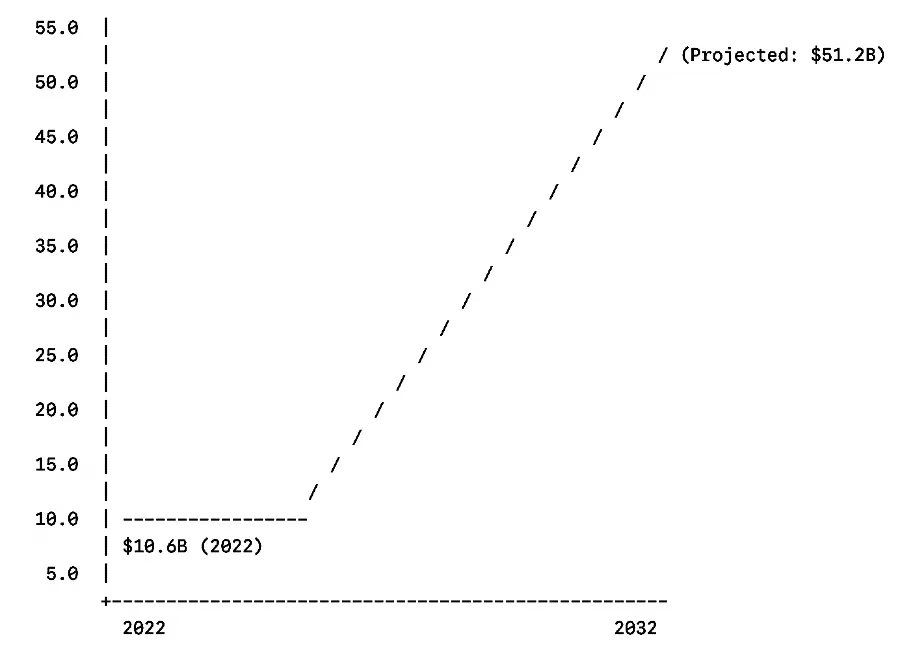
The global sneakers market was valued at USD 78.59 billion in 2021 and is projected to reach USD 128.34 billion by 2030, growing at a CAGR of 5.2% from 2022 to 2030. More specifically, the sneaker resale market itself was estimated at $10.6 billion in 2022 and is projected to reach $51.2 billion by 2032, demonstrating a remarkable CAGR of 16.4% during the forecast period of 2023 to 2032.
Key Drivers:
- Exclusivity and Hype: Limited edition releases from major brands (Nike, Adidas, etc.) create scarcity and drive demand.
- Social Media and Influencer Marketing: Celebrities and influencers play a massive role in creating hype around specific models.
- Sneaker Culture: A dedicated community of “sneakerheads” views sneakers as collectibles, investments, and a form of self-expression.
- Ease of Access: Online marketplaces have made it easier for consumers to access international brands and connect with sellers globally.
- Authenticity and Transparency: Platforms that can reliably guarantee authenticity build trust and attract more users.
- Demographics: Millennials and Gen Z, with growing disposable incomes, are significant drivers of the market, viewing sneakers as both fashion statements and investments.
Regional Dominance:
North America, particularly cities like New York, Los Angeles, and Chicago, dominates the sneaker resale market. However, the Asia-Pacific (APAC) region, including China, Japan, India, and South Korea, is an emerging market with a rapidly growing sneakerhead community. The Middle East, with its high disposable incomes and desire for luxury goods, is also a prospering market.
Chart: Global Sneaker Resale Market Growth Projection (2022-2032)
The Evolving Landscape of Resale
StockX revolutionized the resale market by bringing a stock exchange model and a strong focus on authentication to highly coveted goods. However, the ongoing lawsuit with Nike underscores the legal complexities and challenges arising from this innovative business model, particularly concerning intellectual property and the burgeoning digital asset space (NFTs).
For consumers and resellers, understanding the nuances of platforms like StockX and its alternatives is crucial. While StockX offers a seamless, authenticated experience, alternatives like GOAT, eBay’s Authenticity Guarantee, and niche platforms like Stadium Goods and Grailed provide diverse options depending on specific needs for authenticity, pricing, and item categories. The sneaker and streetwear resale market continues to grow at an impressive rate, driven by a passionate community and increasing accessibility, making it a fascinating space to watch for both business innovation and legal precedents.
Also check:- Is Instacart Worth It? What Are The Alternatives of Instacart